In the last post, I had explained about getting out of Facebook and the steps that one can take to limit their tracking across the web. Getting out of Facebook was fairly easy for me as I had far more reasons beyond just data privacy.
However, “De-Google-ing” my life was far more harder.
The biggest realization for me after that spooky incident was this: Google had changed from “organizing world’s information” and “Don’t be evil” to the biggest Advertising engine of the world who’s sole purpose is to track people, gather data about them and monetize that by selling Ads that can be targetted to those very individuals.
When I looked around, there were so many areas where I was using Google’s services and getting out of all those services wasn’t easy. Its been 3 years since that event and I am still not out of Google completely in my life. There are still bits and pieces of Google that I am still not able to come out of. At least not entirely.
Here are some of the things that I have been able to achieve and these have certainly made differences with respect to how less I am being followed by Google these days.
Android to iOS
Coming from a country like India where affordability and value for money are the biggest drivers of most purchasing decisions, I was no exception. For many years I was on the Android ecosystem.
I was (and still) a strong believer in open source and for a while I was completely against Apple’s closed ecosystem. I have argued many times with friends and colleagues about how a closed ecosystem like Apple’s leads to lesser innovation and monopoly.
But after that incident that spooked me, the first that I did was switching to Apple. Being on Android and using Google’s services, I was literally providing vast amounts of data about myself to power the Ad Engine that Google had become.
The Apple ecosystem is definitely much more expensive (and less innovative – they are still talking about home screen widgets in iOS 14 while Android had it from the time of dinosaurs) than the Android ecosystem. For literally half the cost of an iPhone, you get top of the spec Android phones. iPhones are still pretty much out of the reach for most of the people in India.
However, I now trust Apple more than Google. Primarily because, their profit margins are still on the devices and not driven by data. I feel that Google is discounting all their costs towards Android because they are able monetize through the data collected from its users. As they say, “if there is something free (or cheap) then you are the product”.
Over the last couple of years, Apple has really been focussing on Privacy. For example, pop ups that prompt whenever apps are using location services and showing a map of how the app is tracking your location are steps in the right direction.
I still don’t own a top of the line iPhone 11 Pro. I own a modest iPhone SE. That’s what I can afford now – or rather I don’t like to splurge Rs.100,000 on a phone. When I take my phone out I may appear as someone who has come out of the caves. But I can be rest assured that I am in an ecosystem that I can trust.
Google Search to DuckDuckGo
The next step was to move out of Google as the search engine. I switched to DuckDuckGo and it has been my default search engine for more than a year now.
Google obviously revolutionized the “Search Engine” industry. But today, it is no longer a “Search Engine”. It has transformed itself into an “Ad Engine”.
Here are some examples:
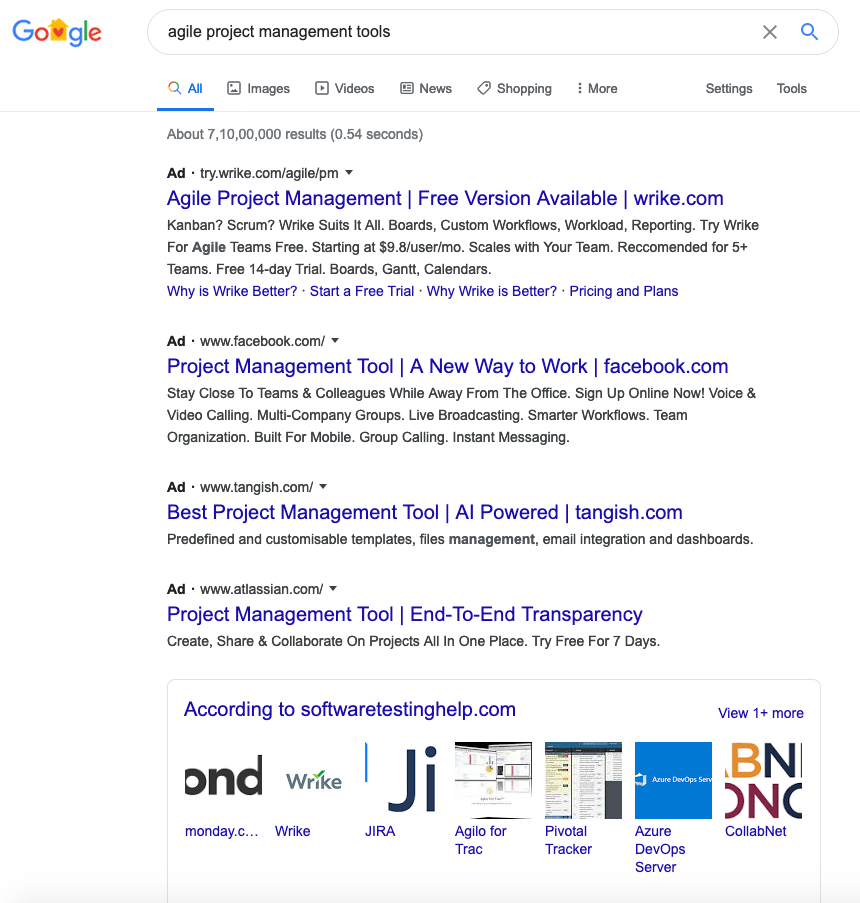
I searched for “Agile Project Management Tools” and the top results are “Ads” – only if I scroll down further I see some organic search results.
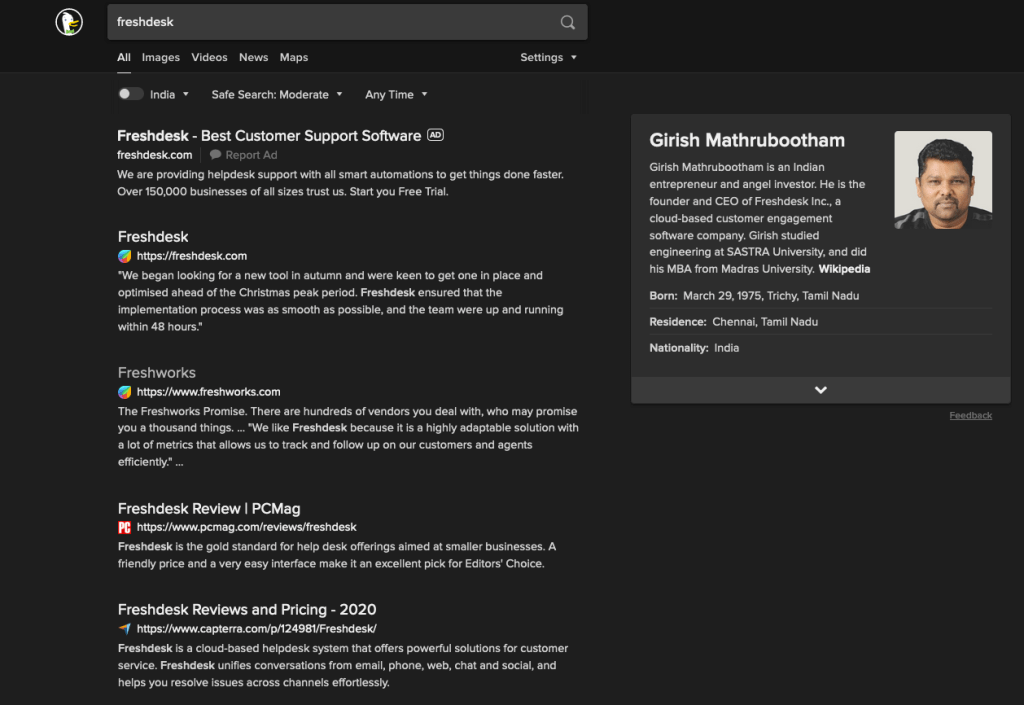
While I could accept to an extent about the above behavior, here’s what is even more shocking. I searched for a specific term “freshdesk” – a helpdesk product from a company called “Freshworks” and here are the results from Google and DuckDuckGo. I am not going to explain the differences between the results – it’s kinda self explanatory. Freshdesk is basically paying Ad money to Google to come on top of search results where the user organically searched for the term “freshdesk” and not a generic term like “helpdesk software”

A brilliant Ad campaign by Basecamp
Basecamp went through the same experience of paying $$$ to Google’s Ad engine to stay relevant in organic search results. And they did something about it. They ran a pretty intelligent Ad campaign and it seem to have had an effect. You can read the following twitter thread for more details:
So why do I care?
After all the above problems are for businesses right? So as an end user why should I care? The problem is that we have come to trust the “Search Engine” as the gateway to the internet. However, an Ad Engine like Google (I no longer treat them as a Search Engine) is manipulating the search results and thereby the user’s behaviour (in terms of our buying decisions). And all these are done for sheer profits in the disguise of convenience for the users by offering them free tools that continuously track them.
So how’s DuckDuckGo working out?
For more than one year, DuckDuckGo has been my search engine across all my devices. And I have been pretty much OK so far. One area where Google still shines is “Local Information”. If I am looking for something specific within my locality, Google still does a much better job than DDG. However, for any of your typical web searches DDG has been fine. I am still able to find product reviews, stackoverflow answers, technical articles, blogs, news, image searches and so on.
I highly recommend switching to DDG and using Google search sparingly. Use Google only if you are not able to find what you are looking for in DDG. Google doesn’t have to be your default search engine!!
Well, the journey has just begun. I have just got out of two tools from Google. However, these are pretty big behavioural changes for anyone – it was for me. Moving from Android to iOS? One needs to completely unlearn years of muscle memory and get used to something new. It’s a big step definitely. But definitely worth it I would say.
If that sounded like too much to you, let’s talk about another beast in the house in the next post.
 CloudStaq
Leave a comment